Let’s make something great together.
Schedule a Meeting
 08/05/2026
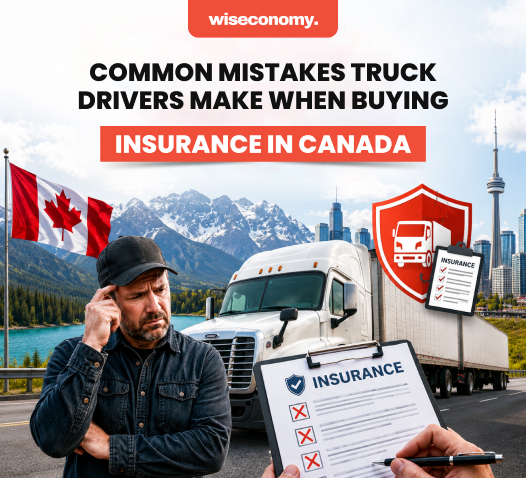
You get your commercial policy sorted. Liability, cargo, the truck itself. Done.
That’s what most truck drivers in Canada do. And most of them miss the bigger problem entirely.
The commercial policy covers your vehicle. Not you. Not your income. Not your family’s rent if you end up off the road for a year. These are two completely different things and mixing them up is the most expensive mistake truck drivers make.
Here’s what actually goes wrong, and what to do instead.
Let’s be direct about what a commercial truck policy actually does.
It covers third-party liability, the vehicle, and cargo (if you added that). That’s the list. There’s nothing in there about your income. Nothing about what happens to your family if something permanent happens to you.
A lot of drivers, especially those newer to working in Canada, get the commercial policy sorted and move on. They figure they’re covered. The policy protects the truck. Not the person driving it.
Two separate things. Both matter.
Nobody warns truck drivers about this one. And it’s the gap that causes the most financial damage.
When you can’t get behind the wheel, the income stops. Most truck drivers, particularly owner-operators, have no employer. No sick pay. No group benefits. Nothing from any company policy to fill that hole.
EI sickness benefits through the Government of Canada run for a maximum of 26 weeks and only cover 55% of your earnings, up to a maximum of $729 a week in 2026. After that, you’re on your own – unless you’ve already put something in place.
A personal disability policy replaces 70% to 90% of your after-tax income while you can’t work. For someone with no employer behind them, it’s the only real income protection that exists.
Haven’t looked at this yet? Personal insurance strategies built for self-employed and high-risk professions are a practical place to start.
This one catches employed truck drivers off guard.
Your employer’s commercial policy covers the company. It handles liability if the truck causes damage or an accident. What it doesn’t do: replace your income. Pay your family a death benefit. Cover you personally if you’re permanently unable to work.
Drivers new to the industry often assume that working for a company means personal protection comes with the job. It rarely does. That coverage ends at the company’s interests – not yours.
Your personal financial protection is yours to sort out. Nobody else is doing it for you.
A policy you bought two or three years ago might not reflect your life today.
Income goes up. Family situations change. Some drivers shift from local runs to cross-provincial hauls. Others make the jump from employed to owner-operator. Each of those changes affects what coverage you actually need.
Transport Canada regularly updates commercial vehicle safety standards as regulations evolve. Your personal coverage deserves the same attention.
Once a year at minimum. And straight away when your income changes by 10–15% or more – that gap between what you earn and what your disability policy covers gets expensive fast.
Years of long hauls take a physical toll. Sedentary hours, poor sleep, high-calorie road food – the profession carries a well-documented link to higher rates of cardiovascular disease, type 2 diabetes, and stroke.
A serious diagnosis doesn’t just affect your health. It can end the career entirely.
Critical illness insurance pays a tax-free lump sum on diagnosis of a covered condition – heart attack, stroke, certain cancers. That payout covers treatment, months off the road, or the income gap if returning to driving isn’t possible.
Most truck drivers haven’t been offered this. Many haven’t heard of it as a standalone personal policy. That’s the problem and it’s a costly one in a profession where the physical risks are real.
Own your truck, run your own operation? You are the business. No HR department. No group policy sitting somewhere with your name on it. No death benefit waiting.
If something happens to you, the income disappears. Your family doesn’t just deal with the loss – they deal with the financial gap at the same time.
It pays a lump sum to whoever depends on you most – your spouse, your kids, your parents. Accessible and, for most people in decent health, affordable. It doesn’t need to be complicated.
Disability insurance protects your income while you’re alive and off the road. Term life insurance protects the people counting on you if you’re not around. Both are worth having. Neither should be an afterthought.
| Coverage Type | Common Assumption | The Reality |
| Commercial Vehicle Policy | Covers everything in an accident | Covers truck, cargo, and third-party liability – not personal income |
| Employer’s Commercial Policy | Protects the driver personally | Protects the company only; no income or death benefit for the driver |
| EI Sickness Benefits | Long-term income support | Covers a maximum of 26 weeks only |
| Disability Insurance | Not relevant unless severely injured | Essential for any driver without employer-sponsored group benefits |
| Critical Illness Insurance | Only for people already unwell | Worth having proactively in any physically demanding profession |
| Term Life Insurance | Can figure it out later | Urgent for owner-operators with young family with kids or mortgage |
Run through these honestly:
If any answer is “no” or “not sure,” there are likely gaps worth addressing. An insurance advisor can identify exactly what’s missing – without fees, without pressure.
The commercial policy covers the truck. Nobody argues with that. But the person driving it needs protection too – income cover, life insurance, critical illness backup.
At Wiseconomy Wealth Solutions Inc., we help Canadians in demanding jobs put together personal insurance plans that reflect real life. Free consultation. No pressure. Honest advice on what you actually need.
Book a free meeting here and get a clear picture of where you stand.

Founder, Wiseconomy
Certified LLQP professional with years of experience helping individuals navigate Canada’s financial landscape, select bespoke insurance coverage, and create personalized investment strategies tailored to their unique goals, needs, and long-term financial well-being.


Yes. The commercial policy covers the truck, cargo, and third-party liability. It doesn’t replace your income, pay a death benefit, or cover a critical illness diagnosis. Personal insurance covers what the commercial policy doesn’t touch.
An own-occupation policy. This type pays out when you can no longer do your specific job – driving. Avoid policies that only pay if you’re unable to work any job at all. That’s a much harder bar to meet and leaves most injured drivers without a payout.
Typically, yes. In Budget 2025, the federal government introduced measures to address the misclassification of truck drivers as independent contractors. If you operate under your own authority, you’re self-employed — no group benefits, no employer coverage, and your personal insurance plan is entirely your own responsibility.
Yes. Life insurance, disability, and critical illness policies are available to permanent residents and many work permit holders through Canadian insurers. Some carry waiting periods for pre-existing conditions. Applying while you’re healthy gives you the most options and the best rates.
Usually, yes – when the injury stops you from working. One thing to confirm before signing: whether the policy covers partial disability. Many back injuries allow some work but not full capacity, and a policy that only covers total disability may leave you without a payout.
Once a year is the baseline. And immediately after anything significant changes – new income, a new dependent, a switch from employed to owner-operator, or new routes. A policy that made sense two years ago might leave real gaps today.