Let’s make something great together.
Schedule a Meeting
 27/03/2026
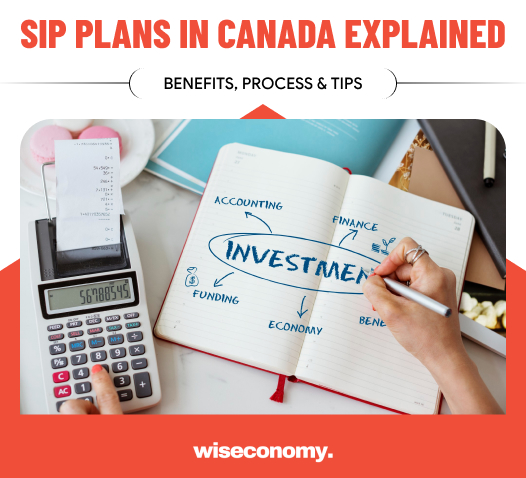
Investing doesn't have to start with a big number. A lot of Canadians sit on the sideline waiting until they have $5,000 or $10,000 saved before they feel ready. That wait is expensive. Not because of bad intentions but because the months stack up and nothing actually gets started.
SIP plans in Canada exist to solve exactly that problem. Small, regular contributions. Automatic. Consistent. And surprisingly effective over time.
SIP stands for Systematic Investment Plan. The idea is pretty simple – you invest a set amount every month into a fund, ETF, or managed portfolio, usually inside a registered account.
The money moves on a fixed date. You choose the amount. You choose the date. After that, it runs without you having to do anything.
What makes SIP plans in Canada worth paying attention to isn’t some complicated investment strategy. It’s automation. Once the habit is built into your finances, it works whether you’re thinking about it or not.
You can set one up inside your RRSP, TFSA, FHSA, or RESP – depending on what you’re saving for.
Timing the market sounds smart. In practice, almost nobody gets it right consistently – not even professionals.
SIPs sidestep this entirely. You invest the same dollar amount every single month. When prices are low, that amount buys more units. When prices are higher, it buys fewer. The result, over time, is that your average cost per unit comes out lower than if you’d tried to invest at one particular moment.
This is dollar cost averaging. And it’s not gambling or something you have to actively manage – it just happens automatically when you stay consistent.
Here’s a basic example:
| Month | Amount | Price Per Unit | Units Bought |
| January | $200 | $20.00 | 10.0 |
| February | $200 | $15.00 | 13.3 |
| March | $200 | $10.00 | 20.0 |
| April | $200 | $13.00 | 15.4 |
| Total | $800 | — | 58.7 units |
Had you put the full $800 in at January’s price, you’d have 40 units only. But when spread across four months? 58.7 units. Same money.
The dip in March hurt people who tried to time it. For the SIP investor, March was actually the best month of the four.
Most platforms allow contributions starting at $50 or $100 a month. That’s it. You don’t need a lump sum ready, you don’t need to wait for a raise, and you don’t need to feel financially sorted before beginning.
Compounding doesn’t care how you started. It cares how long you’ve been going.
This matters more than people admit. The hardest part of investing isn’t picking the right fund. It’s making yourself do it every month without talking yourself out of it.
Automation removes that friction completely. The money moves on a set date. You don’t decide again each month. You don’t check the news and second-guess yourself. It just goes.
When you’re making a one-time investment, a market drop feels like a loss. When you’re on a SIP, a market drop means your next contribution buys more. That mental shift from fearing volatility to being somewhat indifferent to it is genuinely useful.
Run a SIP inside a TFSA and your growth is tax-free. Inside an RRSP, contributions reduce your taxable income today. Inside an FHSA, you get tax deductions on contributions and tax-free withdrawals when you buy your first home. Inside an RESP, the government adds money on top of yours.
None of that happens if you’re investing in an non-registered account. Getting the account right matters.
No long list of steps. The process is short.
Pick your registered account based on your goal – that’s covered in the next section. Then choose what to invest in. Set a monthly amount that fits comfortably in your budget, then set the date to line up with your paycheque.
That’s the setup. Once it’s running, the main thing to do is leave it alone.
Check in every six months or so – not to react to what markets are doing, but to make sure the amount still makes sense and nothing about your goals has shifted. Adjust if needed. Otherwise, let it compound.
The account you use makes a bigger difference than most people expect. Same SIP, different account – potentially very different tax outcome over 20 years.
Your Tax-Free Savings Account is the most flexible option. Growth inside it is tax-free. Withdrawals are tax-free. You can pull money out whenever you need to without penalty.
If you’re not sure what you’re saving for yet, or you think you might need access to the funds before retirement, the TFSA is usually where to start.
Every dollar you put into your RRSP reduces your taxable income for the year. The money grows tax-sheltered until you retire and start drawing it down.
This works well if you’re in a reasonably high tax bracket now and expect to earn less in retirement. The tax you defer today compounds inside the plan, and you pay a lower rate on it later. That gap is where the real advantage lives.
Not the right account if you think you’ll need the money in the next five to ten years.
The First Home Savings Account was introduced a few years ago and remains one of the most underutilised accounts in Canada.
You get a tax deduction on contributions like an RRSP. Growth is tax-free. And when you withdraw for a qualifying first home purchase, that withdrawal is tax-free too. You win on both sides. That’s unusual.
If buying a home is in your next couple of years, a monthly SIP into an FHSA is genuinely hard to beat from a tax and growth standpoint.
The RESP has one feature no other account can match. For every dollar you contribute – up to $2,500 per year – the federal government adds 20% through the Canada Education Savings Grant.
That’s a guaranteed $500 per year from the government before your investments earn anything at all. Start early and that grant alone adds up to thousands by the time your child reaches post-secondary age.
Stopping when markets fall. Counterintuitive, but stopping during a downturn is the worst thing you can do. When unit prices drop, each monthly contribution buys more of them. You miss the recovery if you’ve stepped out. Reduce the amount if you need breathing room — but keep it going.
Choosing the wrong account for your goal. Saving for a first home in your normal bank account instead of an FHSA. Locking money into a rigid structure when you’ll need it in three years. These aren’t minor issues. They have real dollar consequences at tax time. Spend some time confirming the right account before you start.
Setting the amount too high. Ambitious is fine. Unsustainable isn’t. A $600/month SIP that you cancel after four months will do far less for you than a $200/month SIP you keep running for fifteen years. Start where you won’t feel it. Scale up as your income grows.
Watching it too closely. Checking your portfolio weekly doesn’t help your returns. It makes you anxious and creates temptation to react to short-term noise. Monthly is probably fine. Twice a year is enough. Daily is too much.
SIP plans in Canada are not complicated. They don’t need to be.
The gap between people who build wealth and people who don’t usually isn’t investment knowledge. It’s whether they started early and kept going, or kept waiting for the right moment that never quite arrived.
Pick an account. Set an amount. Automate it. Then give it time.
If you want a clear recommendation on which account fits your situation and where to start – that’s something we do every day at Wiseconomy.

Founder, Wiseconomy
Certified LLQP professional with years of experience helping individuals navigate Canada’s financial landscape, select bespoke insurance coverage, and create personalized investment strategies tailored to their unique goals, needs, and long-term financial well-being.


Ans. A Systematic Investment Plan is an arrangement where a set amount is automatically invested at regular intervals – usually monthly – into a fund or registered account. There’s no lump sum requirement. You pick the amount, the account, and the investment, and the rest happens automatically on the date you’ve chosen. Most Canadians run SIPs through their TFSA, RRSP, FHSA, or RESP.
Ans. Genuinely not much. Some platforms start at $25 per month, most are in the $50 to $100 range. The point isn’t the size of the first contribution – it’s getting the habit started. Plenty of Canadians begin at $150 a month and end up at $800 a month five years later simply by increasing it incrementally as their income climbs.
Ans. Yes, completely. Everything inside a TFSA – contributions, growth, dividends – is sheltered from tax. Withdrawals are also tax-free, and you get the contribution room back the following calendar year. For a SIP that might run for decades, that tax-free compounding adds up to a meaningful difference compared to an unregistered account.
Ans. Almost certainly the FHSA. It’s specifically designed for this – contributions are tax-deductible, growth is tax-free, and the withdrawal when you buy your first home is also tax-free. Many first-time buyers don’t know this account exists yet, which means there’s still contribution room available if you open one soon. A monthly SIP into an FHSA while you save for a down payment is one of the most efficient uses of this account.
Ans. You lock in the downside without catching the recovery. When markets fall, unit prices drop and your monthly contribution buys more of them at a discount. The people who stay invested through the dip own more units when prices recover. The people who stopped own the same number they had before the drop. Pausing during a downturn is the single most common and most costly SIP mistake.
Ans. Yes, often the best fit. SIPs don’t require existing financial knowledge or a large upfront sum. The TFSA is one of the first registered accounts newcomers can access, and a monthly SIP into a TFSA is a straightforward way to start building savings from early on. The most important thing is getting clarity on which account is available to you and which one matches your current goal, that’s where getting proper advice makes a difference.